Horace Mann and the Modern Public School System
- Madeline Lench

- Apr 21, 2025
- 8 min read
Abstract
Horace Mann, the father of public education in the United States, believed the economy, poverty levels, crime rates, and society overall could be improved through the establishment of common schools. Horace Mann led the way for the Common School Movement, promoting access to free education for all children while emphasizing the need for unified teacher training programs. As a practicing Unitarian, Mann saw the value of political reform and social activism, advocating for both education and womens’ rights. Though a proclaimed Unitarian, Horace Mann continued to see the benefit of incorporating Scripture into the common school curriculum in order to teach children morals and cultivate useful citizens. In modern schools, however, there has been a shift away from Horace Mann’s original vision for education through the promotion of neighborhood schools. As a response, resources such as Florida’s Step Up Program are making headway to combat the obstruction of Mann’s authentic purpose for public school education.
Keywords: Horace Mann, public school system, common school movement, Unitarianism
Introduction
Horace Mann, most commonly referred to as the “father of public education in the U.S.” (Lancaster 2023), saw the potential for creating a utopian society (Smith 2020). Drawing inspiration from the Prussian school systems, Horace Mann believed economic and social improvements could be made in the United States through the establishment of a public school system, which would focus on cultivating obedient, nationalist, and morally righteous citizens (Curtis 2020). However, there has been a modern shift away from Mann’s original purpose for education, sparking philosophical debates on whether or not the public school systems continue to serve the common good (Mitchell 20204). This paper will discuss Horace Mann’s philosophy of education and examine the extent to which Mann’s vision remains, or ceases to remain, relevant in the United States’ public school systems today.

Background and Cultural Context
Horace Mann was born on May 7, 1796 into a Christian household (Curtis 2020) where he suffered from poverty and lack of proper education (Cremin 2024). Taking matters into his own hands, Mann decided to practice autonomy by spending hours in the Franklin town library, located in Massachusetts, while receiving tutoring in Latin and Greek from Samuel Burrett, ultimately leading to his acceptance into Brown University where he chose to study law. However, having taken pride in his own educational endeavors, Mann took an interest in education philosophy and began to examine the quality of education in the current school systems, inspiring him to serve as the Secretary of the Massachusetts Board of Education, for eleven years in order to create change (Cremin 2024; Winandy & Hemetsberger 2021).
Interestingly, while having grown up in a Christian household, Horace Mann eventually rejected Christianity following the death of both his father and brother in one year, leading him to accept a Unitarian belief system in both his personal and professional life (Curtis 2020). Furthermore, Mann’s philosophy of education was greatly influenced by the War of 1812, where he began to see a dire need for common schools, focusing on the idea that teacher training and instruction should be cohesive and unified across the country, ultimately leading to the cultivation of students being properly prepared for society.

Philosophy of Education
Horace Mann found inspiration in the Prussian school systems, which were “run by the state and paid for by tax dollars…[and included] only enough religion in the curriculum to foster good morals” (Curtis 2020). Mann brought these ideas to the school board of education in Massachusetts, where he advocated for schools to be governed by the state, be free to all, and be staffed by fully trained teachers, particularly women. Mann’s argument for why the public school system should be governed by the state and paid for by tax dollars was that “everyone would benefit – if not directly through having his own child educated, then indirectly by virtue of an increased general welfare” (Freeman 1952, as cited in Winandy & Hemetsberger 2021). Essentially, Horace Mann saw the opportunity for economic and social reform through the establishment of a unified public school system, where students would not only be trained in specific subject areas, but also in obedience, nationalism, civic duty, and morality (Curtis 2020). In fact, Smith (2020) explains how Mann “spoke of a utopian society in which the more schools there were, the fewer prisons we would need,” illuminating Mann’s Unitarian belief system, which valued politics and social activism.
Ironically, although he was a practicing Unitarian, Mann believed that the Bible still held quite a bit of worth. He required that a “nonsectarian form of biblical teaching…be presented in the schools as a means to teach morality” (Smith 2020). His reasoning behind the inclusion of Scripture in curriculum came as a result of the financial crisis following the War of 1812. Horace Mann was extremely motivated to introduce the public school system when he saw the lack of uniformity and financial stability across the United States after the war. Winandy and Hemetsberger (2021) explain Mann’s reasoning, stating that “the American way of participating in society and sharing a common good needed to be learnt in a common institution”. Mann continued to emphasize the need for uniformity and ethics across the nation, eventually resulting in the establishment of schooling as both a “legal” requirement and “social standard” (Winandy & Hemetsberger 2021).
Theory to Practice
Horace Mann was the founder of the Common School Movement and “advocated for normal schools to prepare teachers” (Wells & Clayton 2021). The common school movement pressed for free education, with an emphasis on “conservative-leaning curriculum” which “addressed traditional values and political allegiance” (Wells & Clayton 2021). Additionally, the curriculum would support working class families by teaching their children the basic values of life such as “honesty, punctuality, inner behavioral restraints, obedience to authority, hard work, cleanliness, and respect for law, private property, and representative government” (Urban & Wagoner 2009, as cited in Wells & Clayton 2021).

As stated earlier, Horace Mann understood the importance of teaching children morality through the use of Scriptures. He believed that by focusing on morality and ethics, students would become obedient and “useful citizens” and would, therefore, be able to drive down the crime rates, decrease poverty, and improve the overall economy when they took their place in society (Curtis 2020; Smith 2020). However, Mann did receive some pushback from families who either “wanted no religion at all” or “believed that doctrinal catechisms were necessary for any meaningful teaching of religion,” though many of these concerns were resolved with the establishment of private school systems (Smith 2020).
Furthermore, Horace Mann was the driving force behind formal teacher training. He created a mandatory system of training schools “so that all the teachers would [learn how to] teach the same thing using the same style,” therefore fulfilling his vision for uniformity in education across the country (Curtis 2020). The curriculum for the teacher training schools, also commonly referred to as normal schools, prioritized subject expertise, classroom management skills, and the overall teaching practice, ultimately leading to the establishment of teaching credentials regulated by the state (Wells & Clayton 2021).
Perspectives on Diversity
The Unitarians were known for valuing higher education and involving themselves in “politics and social activism,” specifically in the areas of “education, abolition, and women's rights” (Smith 2020). Horace Mann, a Unitarian, believed strongly in the influence of women as teachers in the public school systems, so much so that he developed a training program primarily to serve prospective female teachers, as stated prior (Wells & Clayton 2021). Unitarians had a reputation for radical thinking and teaching for their time.
Beyond social activism, Horace Mann believed in the power of equality, going so far as to argue that “ a public education system would be ‘a great equalizer of the conditions of men.’” (Lancaster 2023). Furthermore, Mann is well-known for coining the phrase “the balance-wheel,” referring to uniformity within society through the establishment of public education. His vision for a utopian society relied on the development of a free, public education where all students, not just the wealthy boys, could attend and learn to become moral and honest citizens (Wells & Clayton 2021). Therefore, promoting diversity and unity among the diverse population, specifically in the area of gender roles, was a driving force behind Horace Mann’s vision for improving the economy and social society.
Critical Analysis
The Common School Movement was not only founded by Horace Mann, but also by like-minded philosophers and education advocates who partnered with him, such as Samuel Lewis, Calvin Stowe, Lyman Beecher, and William McGuffey (Smith 2020). However, Lyman Beecher, did not fully support Horace Mann’s beliefs about access to education or the extent to which Scriptures were taught. Smith (2020) explains how Beecher “led a campaign against Unitarianism” and was concerned with the “perverted literature in the curriculum of the common schools” because they did not fully rely on Biblical doctrine.
Interestingly, Catharine Beecher, the daughter of Lyman Beecher, “joined forces with [Mann] in the belief that education would serve as a tool,” and can be credited for the “feminization of teaching” (Smith 2020). While Catharine Beecher refrained from becoming involved in political reforms, such as women's suffrage, she believed that women “were moral compasses for society and were uniquely suited as teachers and mothers,” therefore, she partnered with Horace Mann by not only becoming the first well-known female teacher, but also serving as an “instructor at a normal school” to help prepare other teachers (Smith 2020; Wells & Clayton 2021).

Implications and Conclusion
The foundation of Horace Mann’s beliefs were based on his idea of the common good, arguing that the establishment of the public school systems would be beneficial to all people because of their devotion to cultivating “useful citizens” that would improve multiple components of society (Curtis 2020; Smith 2020). Mann’s original and authentic vision for public education did not last long, however. Ken Mitchell (2024) writes about the current debates among the United States school systems, where parents are beginning to question whether or not public schools continue to serve the common good. Mitchell brings to light a concept called, “the neighborhood effect,” which Milton Friedman claims is imposing “on goals related to the individual freedoms of families” (2024).
One example of a state’s reaction toward the “neighborhood effect” is mentioned in Florida’s new Step-Up Program, founded in 2023, which allows families to use the tax-dollars that were originally awarded to students for their public education and, instead, allows them to apply it as a voucher toward their family’s choice of school, such a private school or a homeschool program (Step Up For Students 2024). The establishment of neighborhood schools, which was not part of Horace Mann’s original principles for public education, arose in response to The Great Depression (Maier, Daniel, Oakes, & Lam 2018). It stands in contrast to Mann’s belief that “such education should be paid for, controlled, and sustained by an interested public” (Mitchell 2024).
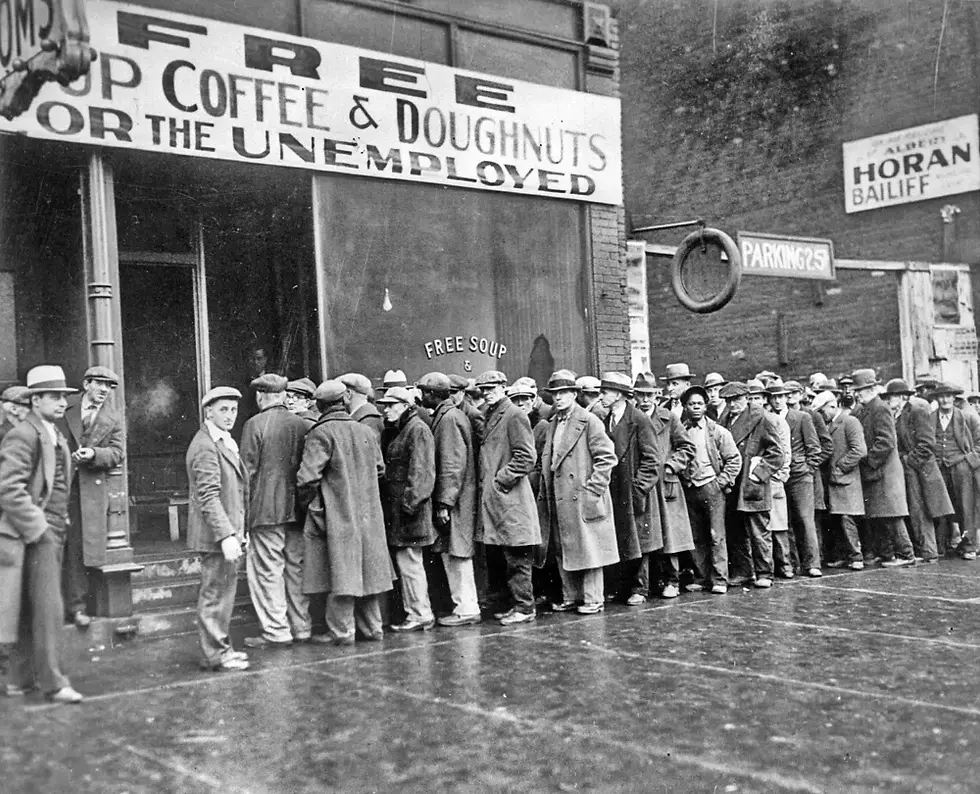
Therefore, one can assume that if Horace Mann were to walk into a public school today, he would likely be disappointed by what he saw. Mann’s true intent for the public school systems was to provide an “opportunity for social mobility from one [social] class to another,” not for students to be chained to their current socio-economic status by being forced to attend their neighborhood school (Smith 2020). There needs to be a call for change in the modern public school system. Based on the authentic vision of Horace Mann, the father of public education, a return to the original purpose of public school systems, including the integration of Scripture to teach students proper morals and ethics, is not only beneficial but necessary in order to restore the economy and society of the United States today and ensure that “useful citizens” (Curtis 2020) continue to be cultivated.
References
Cremin, L. A. (2024, July 29). Horace Mann. Encyclopedia Britannica. https://www.britannica.com/biography/Horace-Mann
Curtis, M. (2020). Will the real father of American education please stand up? Old Schoolhouse, 60–61.
Maier, A., Daniel, J., Oakes, J., & Lam, L. (2018). A promising foundation for progress. American Educator. https://www.aft.org/ae/summer2018/maier_daniel_oakes_lam#:~:text=The%20next%20wave%20of%20support,community%2Doriented%20approaches%20to%20education.
Mitchell, K. (2024). America’s public schools--public goods or monopolies. AASA Journal of Scholarship & Practice, 21(1), 4–13.
Smith, J. S. (2020). Windows into the history & philosophy of education. Kendall Hunt Publishing Company.
Step Up For Students. (2024). Florida choice scholarships: Family empowerment scholarship for educational options, Florida tax credit scholarship program, personalized education program[Handbook].https://go.stepupforstudents.org/hubfs/HANDBOOKS/Parent%20Handbooks/FTC-Parent-Handbook.pdf?_gl=1*1ys2ghk*_gcl_aw*R0NMLjE3MjU3MzQ5ODAuQ2owS0NRanc4LS0yQmhDSEFSSXNBRl93MWd4MUVsRmdUbWdMYlZOZFdoOVFaZERNZmpoYjI3YkRlZG1mYml6ZkVlLXg0dHVLVEducGVHQWFBbmtaRUFMd193Y0I.*_gcl_au*OTY3MTcyOTU5LjE3MjU3MzQ4NTQ.*_ga*MTg2NDQ5Nzk1MS4xNzI1NzM0ODU0*_ga_V4KBYBT1HD*MTcyNTczNDg1NC4xLjEuMTcyNTczNTE1NC42MC4wLjA.
Wells, M., & Clayton, C. (2021). Foundations of American education: A critical lens. Viva Pressbooks. https://viva.pressbooks.pub/foundationsofamericaneducation/
Winandy, J., & Hemetsberger, B. (2021). Ordering the mess: (re-)defining public schooling as a remedy. Paedagogica Historica, 57(6), 717–727.


Comments